Super Productivity Top 10 Tips

Productivity

Super Productivity is productivity that not only allows you to get stuff done but to feel super about it.

I have an aversion to pain and suffering.If it is Painful Productivity I don’t want any part of it.

I was reading a blog post that featured some productivity wisdom by Tim Ferris, author of the international best seller The 4-Hour Workweek. I was gratified to see that of the six tips he offered, I always teach 5 to my clients who want to increase productivity.

I’m expanding my thinking these days, so instead of 5,  here are Ted’s Top Ten Tips for Super Productivity.

1. Start the day centered and grounded. Jim Rohn said “Either you run the day, or the day runs you.” How you start the day will affect how your day goes. If you wake up and you are already rushing around and running late, the day is running you. Give yourself some space to be prepared mentally and feel super  in the morning, even if it means getting up earlier to exercise, read or meditate.

2. Write down your goals the night before. Make your to do list the night before. Plan to start the next day with the most important things that will make the biggest difference, or start with the hardest. This way, you move into the day with momentum and the feeling of productivity and being super!

3. Keep yourself fed and watered. I have an avocado tree and a tangerine tree in my back yard. If I don’t water them and feed them, they don’t produce. Same with you.

4. Have a routine or a system. Develop a habit of productivity by using a system that works for you. It might include a Franklin Covey type planner, Outlook tasks, or one of the many online tools available. I use the Pomodoro Technique and a daily calendar sheet with my list that I carry around in my shirt pocket. Not very high tech but it super works.

5. Prioritize tasks. Some days you are not going to be able to do it all. Prioritization maximizes your productivity and focus so that you get the most super important stuff done. Roll the non-essential stuff over to another day.

6. Pay someone to do those things that are not worth your time. What can you take off of your plate by paying someone else to do that gets paid less per hour than you do? For 10 bucks week, my super gardener does in 45 minutes what it used to take me 3 hours to do.

7. Work simultaneously instead of sequentially. Instead of working on something  for four hours, work on it for an hour and half, then another project for an hour,  then another for an hour or so.  Be moving a number of projects forward a the same time. Waiting to start the next one until the current one is done is a super productivity killer.

8. Get rid of distractions. Turn off email, Facebook and silence your phone while you are working on a task. These are the biggest time vampires that will suck the productivity out of you. Work for an hour, then take 15 minutes to return calls or email. One guy I know has a phone message: “I return calls between 4 and 6 pm”, thus setting the expectations of his callers as to when their call will be returned. Guard your time like the super precious asset it is.

9. Be ok with failure. Dan Kennedy says “Success is cooked up in a messy kitchen.” Don’t wait for conditions to be super, or perfect, or for your desk to be organized or the moon to be full. Just start and keep moving forward. Things might get screwed up, you may need to scramble, improvise, or start over. Sometimes that’s what it looks like.

10. Take a break. Being super productive doesn’t mean killing yourself or not spending time with loved ones. Productivity doesn’t necessarily mean struggle either. Play some music, take a walk, call a friend, eat some ice-cream, then get back to it refreshed and renewed and feeling super good!

Need help with productivity or procrastination? I’d love to help you. Click here to contact me. And, to hear my podcast of this blog, check out my podcast TedinYouHead.com episode 65.

Your companion on the path to possibility,

Ted

 

Weight Loss is Seldom About Weight

Weight Loss

“Truth is Beauty” photo by Jennifer Morrow

Of all the things I help people with in my hypnotherapy practice, it seems that weight loss is the most difficult. 

I don’t really advertise it. When someone calls me for weight loss, I tell them that it is going to be a minimum of eight sessions.  I want to make sure they are serious.

Because weight loss is rarely about food and weight.

I was recently asked by the amazing Lauren Herrera of Pilates Barbell Club in Pasadena to be a contributor to her Triple Fat Loss Formula Program. (Click here to see outtakes of a video we made.)

She posted a blog post with words that carry uncommon wisdom and leave no doubt in my mind that she “gets it” when it comes to weight loss and fitness. Here’s a little of what she wrote:

“Food issues” and losing weight are rarely about the food or the weight.

Our interaction with food and our reliance on self-acceptence through a number on the scale or tag on our clothing perpetuates a never ending battle of self-hate, deprivation of food, insane exercise regimens (over-doing cardio, or actually doing an ‘insane’ workout) encompass the never-ending cycle of diet, binge, repeat. Or worse, diet, workout like a nut, get injured, then binge out of depression and defeat and then repeat.

If it’s not about the food, than what is it about?
Well, YOU. And everything that makes you UNIQUE, WONDERFUL, TALENTED and LOVABLE. Even if you don’t see it.

Weight loss is about being ok with and accepting yourself.


Lauren’s ideas about weight loss reflect an enlightened approach because they speak to the reasons why weight loss can be so hard.

The reason weight loss can be so difficult is because very often food is used to soothe negative emotions such as stress, low self worth, worry, anger, and  emotional pain such as loneliness and depression . It’s hard to see these emotions as part of the cause of being overweight when so much attention is on comparing one’s body to the body on the latest cover of  Whatever Magazine. Or, focusing on the latest diet or work out fad.

Furthermore, weight loss can be sabotaged by what is known as “secondary gain”. This is a situation where subconsciously, there is more advantage to keeping the weight than losing it.

For instance, after the loss of a relationship and the resulting heartbreak,  a woman may desire to lose weight, but be unable to do so no matter how hard she tries. This can be a fear based protective mechanism to avoid attracting another relationship and the emotional pain that may result. This is almost impossible to see in one’s self without some help. But if you can see it, then you can deal with it through compassion and love for yourself to heal and move forward.

This blog post is not about how to achieve weight loss, it’s simply food for thought (no pun intended) if weight loss is one of your goals.

A very helpful question to ask yourself in your quest for weight loss is “What am I hungry for?” We are all hungry for love, attention, happiness, acknowledgement, and acceptance. Once we can identify our deep seated human needs, then we can begin to work on getting those needs met. If we can’t identify our needs, we will find a way to ease the pain of the lack of them, be it through, food, alcohol, drugs, sex or work.

The intention behind weight loss should be to honor the gift of our bodies through physical fitness and health. Start with that in mind and everything else will follow. Like Lauren says:

Truth is our attractiveness will fade with age. But, our ability to be independent, self-reliant and MOBILE when we are pushing 75 is the bigger picture. Enjoying the 100 year lifespan we are projected to have is what it’s about for me.

Me too. Hope to see you in 2060.

Ted

Self Hypnosis Class Starting June 14: Master Your Mind

Self hypnosis

Why is permanent change so hard?

The answer is because only 12% of your mind (conscious) wants to change.  Your subconscious mind, which is 88% of your mind, wants to stay the same. What your subconscious mind wants is based on your childhood conditioning, past experiences and beliefs.

You have the ability to change your subconscious programming using self hypnosis.  You’ll have an opportunity to learn self hypnosis at my upcoming Self Hypnosis for Success Class at Pasadena City College starting June 14th. Click here to register.

Self hypnosis is  used by celebrities, athletes, performers, business people, salespeople, and entrepreneurs. Why? Because they know that to achieve high level success in any endeavor, you must master your mind. You must take control of what you think, because you become what you think about.

 Learn Self Hypnosis for Success!

  Self Hypnosis for Success begins Saturday, June 14th from 9 am to 10:30 am at Pasadena City College and continues for the next two Saturdays (6/21 and 6/28). To register, click here.

Master your mind using self hypnosis to:

  • Have the correct mindset and attitude for success in business and personal life.
  • Get rid of procrastination that keeps you stuck and in a rut.
  • Feel less self-conscious and more relaxed and confident in social and professional situations.
  • Increase sales through higher confidence and less call resistance.
  • Get relief from stress, anxiety and fear.

Master your mind and put it to work for you! Click to register 

In Self Hypnosis for Success, you will learn:

  • How to put yourself into hypnosis.
  • How to use the power of  suggestion to re-program your subconscious mind.
  • How to put it all together to create a mind conditioned for success in just a few minutes a day.

If you are one of those people who know that the quest for self improvement is never ending, you’ll want to register for Self Hypnosis for Success by clicking here.

Hope to see you on June 14th,

Ted

Image by Skye Moorhead

Do You Have Scarcity Consciousness?

scarcity consciousness

I’m researching  how to counteract “scarcity consciousness” and create a mindset for wealth and abundance. 

I’m interested in your relationship with money and how you feel and think about it. So I’ve put together a short 10 question survey. I wonder if you would take a few minutes to take the survey if you haven’t already. I will share the results with all. 

Here is the link: https://www.surveymonkey.com/s/J325X9Z. Thank you!

In Deepak Chopra’s book “The Seven Spiritual Laws of Success”, he tells a story about the Maharishi Mahesh Yogi, the guy that founded Transcendental Meditation as well as the guy the Beatles hung out with in India.

The Maharishi wanted to organize a massive pilgrimage and attract hundreds of thousands of people to the event.  However, the Maharishi was poor and didn’t have a lot of money. Nevertheless, he continued to plan for the event. One of his organizers, seeing the clear lack of financial resources, approached him. “Sir”, he said, “This is a noble effort, yet it is significant in size and cost. Where will the money come from?” The Maharishi replied “From wherever it is now.”

I don’t know too many people that have this kind of “abundance consciousness”. What seems much more common is “scarcity consciousness”: the feeling that there is not enough. What’s interesting is that this scarcity consciousness seems to have little to do with how much what we actually have.

Examining Scarcity Consciousness

Examining my own life, I’m able to identify some reasons for my own scarcity consciousness in the past. I wonder if any of you can relate.

There were 8 kids in my family, and until I was in the 6th grade my mom stayed at home while my dad worked at his own business. Dad spent a lot of time at work in order to support eight kids.

As a child, I could see that he was stressed out. It seemed to me that to own a business and try to make money was not a good thing, as it meant you would be stressed out and not be able to spend time with your kids.

I went to a Catholic grammar school and high school. In 12 years of my schooling, there was never any discussion of success, money, how to make it, what to do with it, or why we should even care. In fact, the message I received was quite the opposite:  money is the root of all evil, if you want money you are greedy, and it’s easier for a camel to pass through the eye of a needle than for a rich man to enter heaven.

I entered college with no real goals and certainly no desire to make a lot of money. After slumming my way through college and eventually dropping out, I had a succession of in-home sales jobs which left me struggling financially and  in debt.

I got a “real” job in a mall at a Things Remembered store, but got fired because I kept forgetting to turn on the revolving tower of key blanks. When I got into my car to drive home, my car wouldn’t start.

That night I found an ad in the employment section of the newspaper promising “High pay in a rock and roll atmosphere!”

To make a long story short, I took the job, (another in- home sales gig)  started making a lot of money, gave my beater car away and bought a used Pontiac  Fiero. After a few more months, I lent the Fiero to a friend, and started driving a Porsche. Then I found out that the owners of the company were con men. I quit the job, turned in the Porsche, got back the Fiero (payments were not kept up) and was struggling again. My girlfriend dumped me, I got evicted from my apartment, and my Fiero got repossessed.

At that point, (1987, 27 years old) I remember making five decisions which would reinforce whatever scarcity consciousness I had and impact my life for more than a decade:

  • To aspire to make a lot of money means you have to cheat people.
  • It’s better to be poor (maybe I’ll become a monk…)
  • I never want to own a business.
  • I never want to get married or have kids.
  • I never want to own a house.

In the years that followed, I struggled constantly with a lack of money, but I also did a lot of work on my own personal self development. Somehow, in spite of those experiences and decisions, from  2003 to 2009  I managed to start a business, get married, have kids and buy a house.  I figured I was done with scarcity consciousness.

But the effects of subconscious programming run deep, and exist at a level most of us are not aware of. I’ve become aware that I still have work to do to counteract the negative programming of my early years.

I can’t blame anyone or anything for whatever scarcity consciousness I’ve created for myself. So I’m currently reading, studying, doing affirmations, seminars, self reflection, self hypnosis and a lot of hard work to see if I can create a higher level of  “abundance consciousness”.

That’s my story. Next week I’ll share some of the resources I’ve been using.

Blessings and abundance to you!

To hear a podcast of this blog, go to my podcast TedinYourHead.com episode 66

Ted

Meditation: Is it for You?

Meditation

Young children meditating in a Peruvian school.

“Meditation is a lifelong gift. It’s something you can call on at any time. I think it’s a great thing.” ~Paul McCartney

“At the end of the day, I can end up just totally wacky, because I’ve made mountains out of molehills. With meditation, I can keep them as molehills.~Ringo Starr. If you are old enough, you know that Paul and Ringo hung out in India with Maharishi Mahesh Yogi, the founder of Transcendental Meditation.

“I’m quite a neurotic thinker, quite an adrenalized person. But after meditation, I felt this beautiful serenity and selfless connection.” ~Russel Brand. He’s kinda wacky. He probably should be meditating or on meds.

“Meditation is all about the pursuit of nothingness. It’s like the ultimate rest. It’s better than the best sleep you’ve ever had. It’s a quieting of the mind. It sharpens everything, especially your appreciation of your surroundings. It keeps life fresh.”  ~Hugh Jackman. The Wolverine meditates?

“We all have within us a deep well of creativity, which we can access if we can settle down into those deep, calm places, those serene moments that Transcendental Meditation offers.” ~ That’s Dr.Oz, vice chair and professor of surgery at Columbia University in New York City where he performs more than 300 heart operations a year.

Meditation seems right for some well known celebrities. So it it right for you? 

There are many ways to define what meditation is. Most definitions agree that meditation (often referred to as mindfulness practice) is a practice used to bring the mind and body under greater self control for mental well being, relaxation and concentration,  building one’s energy or life force, or to foster qualities such as compassion, love and forgiveness.

Meditation has been practiced since antiquity mostly as a part of religious traditions and beliefs. There are meditation practices that involve sitting, standing, walking, moving (such as tai chi) and even dancing.

So why would you want to meditate? I can only give you my opinion as someone who has meditated in the past and who is trying to get back to it as a daily practice.

Most research has been done on the Transcendental Meditation technique with hundreds of studies published. So there are some proven health benefits of meditation: reduced cortisol (the stress hormone), lowered anxiety and depression, reduced insomnia, lower blood pressure and risk of stroke and heart attack, and increased learning ability and memory.

I think the best reason to meditate, in my opinion, is to get to know and be at peace with yourself. The Tibetan word for meditation is “gom” which means “to become familiar with one’s self”. I think that’s important because whatever we can become familiar with, we can become comfortable with.

We are uncomfortable with ourselves when we have thoughts and feelings that create stress, tension and unhappiness. Sometimes it seems that we are at war with ourselves as we deal with conflicting thoughts and feelings about who we are, what we do and the circumstances of our lives.

The reason our thoughts and feelings can create negativity within us is because we identify with our thoughts and feelings. We believe our thoughts and feelings and we become attached to them.

What meditation allows us to do is to observe our inner process and see it for what is is: our inner process, and not who we are. 

If you have ever had the experience of telling yourself “I don’t need to let that (person or circumstance) bother me any more” then you know what it feels like to detach from conditioned reactions.

Is meditation right for you? It is if

  • you desire more peace of mind
  • you desire more control over what you think
  • you desire a greater sense of self awareness
  • you desire a deeper sense of being present to the experience of your life.

I am not an expert in meditation nor am I a meditation teacher . But I would like to give you a very simple technique that can introduce you to the benefits of meditation. Meditation is a practice, and becomes more powerful if done daily.

  • Start with 5 minutes at a time when you can be still and quiet. Sit in a chair with your feet flat on the floor and your hands resting in on your thighs or lap. Do this at a time of day when you don’t feel rushed and won’t be disturbed.
  • Focus and become aware of your body:  how it feels, what the energy of your body is like, what’s going on inside your body. Just notice.
  • Take a few deep, slow breaths and close your eyes.
  • Now let your breathing happen by itself and just watch it. Put your attention on your breathing.
  • Thoughts will come up. Your mind will drift. You may have feelings.  That’s ok. Notice whatever comes up, let it go and go back to your breathing.
  • See if you can be aware of the constant parade of thoughts, images and feeling that flow through your mind. You will find yourself getting carried away by your thoughts. Just keep bringing your attention back to your breathing. Some people find it helpful to count breaths to 10 and then start again.
  • Don’t get attached to doing it right. The key is not to stop your thoughts or prevent the mind from doing what it does. You just want to observe.
  • Do this daily. Try to up it to ten or twenty minutes.

There is much information available about meditation including classes, books and online information. My friend Julia Hilton has an excellent book Basics of Meditation: The First Steps to Changing Your Mind and Your World.

To be able to sit quietly and comfortably with yourself and get familiar with your own mind is an invaluable gift that can be life changing. Consider giving it to yourself.

Ted

Quit Smoking: Tips, Tools and Tricks


quit smoking

I read a funny quit smoking joke by Conan O’Brian: “The CDC says that it’s graphic anti-smoking TV ads have have helped over 200,00 people to quit. Not quit smoking, quit watching television.”

But if you are a smoker, and want to quit smoking, you know that quitting smoking is no joke. It can be very hard.

The dangers of smoking are well known. Since May is  National Health and Fitness Month, I’d like to provide some tips to help you quit smoking. If you don’t smoke but know someone that does, please forward this to them.  It might just save their life.

Some people are able to quit smoking on their own, but research show that the best way to quit is through evidence based smoking cessation technologies and programs. Seventy percent of smokers will attempt to quit smoking without using a program and 9o percent will relapse. (Institute of Medicine of the National Academies.)

Ready to quit smoking on your own? Here are some tips to increase your chances.

  • Have a plan. To quit smoking, you must be prepared. Pick a goal date when you will smoke your last cigarette and start your life as a non-smoker. Between two weeks and 30 days from today.
  • Get a physical. Be aware of any health problems that may exist. It’s better to know. Make sure it’s ok for you to exercise.
  • Get regular exercise. Get your health back.  Walking is a great way to start, riding a bike or doing exercise videos at home. Exercising will also help you deal with negative feelings that may arise in your first days of quitting.
  • Prepare to quit. If you smoke over a pack a day, give yourself two weeks to prepare your mind to quit smoking. If under a pack, give yourself a week. Adjust if necessary and based on your intuition and experience. During your preparing to quit period:
  • Write down all the reasons why it’s so important for you to quit smoking. The more emotional, the better. (“I don’t want my kids to watch me die of lung cancer” for example.) Write your reasons down on a few 3×5 cards and carry them with you. Put them up where you will see them. Read them several times a day.
  • Change your diet. Since nicotine acts as an appetite suppressant, you don’t want to gain a bunch of  weight after you quit smoking. (Very common after folks quit smoking.) Start to eat three healthy meals a day with healthy snacks in between. Increase protein and reduce refined carbs.
  • In your preparation period, start to scramble your smoking pattern. For instance, if you smoke in your left hand, start smoking in your right. If you like smoking on the front porch, change your smoking spot to some uncomfortable place like out by the trashcans. Stop buying cartons and buy one pack at a time, changing brands each time you buy a pack. Start cutting cigarettes in half.
  •  FIND REPLACEMENTS. In my opinion, this is the number one secret to successfully quit smoking. There are many reasons people smoke: to ease boredom, reduce stress, relax, as a reward, or simply because it’s a habit. Of course, there is the addiction component as well. Find things to replace  smoking with and have them ready on your quit day. Some examples:
    1. Find ways to stay busy to keep from being bored. At work instead of a smoke break, take a short walk.
    2. Keep your mouth busy using sunflower seeds in the shell, gum, sugar free suckers or hard candy, licorice, carrot sticks, celery sticks, pretzels, flavored toothpicks. Some people say that putting a Listerine slip in their mouth takes away the urge. Drinking milk works too.
    3. Keep your hands busy with a stress ball, or an object you can keep in your hand like a pen or small stone.
    4. Drink lots of water.
    5. Take a Vitamin B supplement to help with stress.
    6. Deep breaths.
    7. Use the nicotine patch,  gum or prescribed smoking cessation meds if you need to, they are much more effective when used in combination with the techniques I’m giving you here.
  • Use affirmations. Use positive self talk such as “I am free!” or “I can do this” or “I am in control” or I’m worth taking care of ” or “I am healthy, happy and free from addiction.” Make it a habit to say them several times a day.
  • ON YOUR QUIT SMOKING DAY: Tell everyone what you are doing to make yourself accountable. Pick your quit day carefully; a day when you have time to focus on your goal.
  •  After you quit smoking, avoid drugs like alcohol and marijuana which can decrease your motivation. I suggest giving them up at least for the first month of being a non smoker, longer if they are major triggers that make you want to smoke. If coffee makes you want to smoke, cut down or eliminate it for a while.
  •  Get lots of sleep. You body needs energy to heal.
  • Get your teeth cleaned. 
  • Get your car washed and detailed if you smoked in your car.
  • Avoid situations that will tempt you. Stay away from bars and parties where people will be smoking. Ask those close to you to refrain from smoking in front of you.
  • Give yourself a reward. Have a plan to get a massage after 30 days of smoke free. Or take a trip. Or buy something for yourself.
  • DON’T KID YOURSELF! Don’t even think for a second that you can have “just one” after you quit. Chances are you can’t. “Just one” can undo all of your hard work. Begin to see cigarettes for what they are: a deadly poison that you want to stay away from.

Hypnosis was found to be more than twice as effective as quitting “cold turkey,” and over
three times as effective as nicotine replacement therapy, according to a a study presented October 22, 2007 at the annual meeting of the American College of Chest Physicians.

I offer a four session “Freedom From Smoking Forever” ® program using hypnosis and hypnosis recordings for listening  at home.  Research shows that using hypnosis to quit smoking can be up to 66% effective when 4 or 5 sessions are used in a 6 to 12 month period.

Your health is the most precious thing you have. If you are ready to quit smoking and want more information about my smoking cessation program, you can request a free consultation by clicking here.

Ted A. Moreno
Certified Hypnotherapist

Exploring the Music of Your Life

Music of your life

Sie klingen nicht das gleiche! (They do not sound the same!)

I just finished an online course exploring the 32 Beethoven piano sonatas. ( I was a music major in college.)

Before the course started, I purchased a collection of all the sonatas and started listening to them. I enjoyed them because I like classical piano music. But they all sounded the same to me. Each one was like the others.

The class started and I learned what a piano sonata is (a solo piano work in one or more movements). I learned why they are called sonatas (first movement is usually in sonata form).  I learned to identify movements in rondo, variation and scherzo forms.

Soon, I was able to distinguish the unique characteristics of each of the 32 sonatas. I began to recognize the repetition of certain musical patterns. I came to understand how Beethoven constructed his most important sonatas in ways that stretched the boundaries of  classical composition established by Haydn, his teacher,  and Mozart.

Before I took the Beethoven course, the sonatas would’ve made nice background music. Now, I can appreciate them for the genius that lies within them, the underlying structures so precisely crafted, and the musical themes that allow us to know Beethoven through the emotional content of his music.

This exploration of Beethoven’s music gave me distinctions. This is the basic pattern of learning. We attempt to understand something, and as we continue to explore, we begin to develop various distinctions, which allows us to see more clearly into a thing or situation.

If you are a chef, you have distinctions for cooking that most people don’t have, such as bard, parboil and zest. If you are a building contractor, you can look at a building and identify things that non contractors don’t see, like astrigal molding, blind stops and collar beams.

Exploring the music of your life is your own personal development.

Once you begin to explore the music of your life, that is, to make a study of your own process in an attempt to understand why your life “sounds” the way it does, then you can begin so see more deeply into how your life is constructed. More importantly,  you can identify aspects of your life that flow, and those that do not.

You might learn what triggers you to anger, what makes you sad, and what leaves you powerless. You can identify hidden fears that keep you stuck in patterns that are not pleasing or beneficial to you.

Now you have some distinctions about the music of your life. Amid the noise of our lives we can now hear what stops the flow and creates disharmony. Then, we can become attuned to the thoughts, feelings and behaviors that resonate with the right vibration that allows us to create our lives as masterpieces.

However, this involves a conscious choice to study the music of your life that you have created so far and to understand why it exists in the form that it does. We make this choice out of a desire to create lives of greater harmony,  fulfillment, or excitement. Most of us have the feeling that a radically different experience of life is possible, but we don’t have the distinctions necessary to get there.

Until we choose to create our lives on purpose, we are composers without paper, chefs without recipes and contractors without blueprints. We are at the mercy of what life delivers to us without knowing what do do with it, and we can end up dancing to a tune that doesn’t resonate with us. 

But once we take full responsibility for our life with the aim of exploring what is possible, we can ask “How can I bring together all the parts of the music of my life in a powerful way?” instead of “Why is everything out of tune?”

George Bernard Shaw said “Life is not about finding yourself, it’s about creating yourself.”

Are you creating yourself by purposefully composing the music of your life so that the parts fit together beautifully and harmoniously?

Or does the noise and din of your existence make you wish you were deaf? If so, then begin with an exploration of the music of your life. Start with one part that is not in harmony and seek to understand why that part is out of tune.

Devote a month to studying that part of your life, whether it’s your marriage, your job or your internal (mind) experience. Read books and talk to experts. Develop distinctions such as “When this happens, I always do this” or “Thinking about doing that shuts me down” or “I really don’t like this part of myself at all”. Be honest and non-judgmental. The goal is to begin to distinguish what is working and what is not.

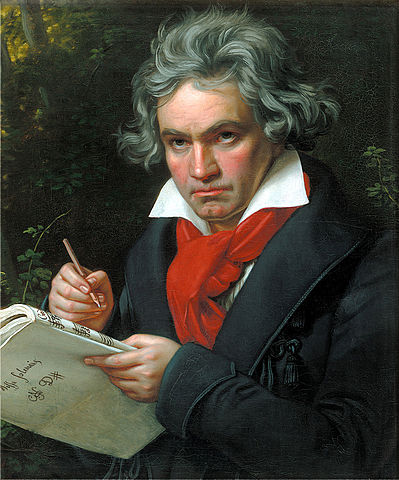
The music of your life well lived is the highest art. As Ludwig said: ” Don’t only practice your art, but force your way into its secrets; art deserves that, for it and knowledge can raise man to the Divine.”

Ted

Masters of Self Deception

Self deception

“To thine own self be true” said Polonius the deceiver, in Hamlet.

Sometime in the 90’s while I was living in Tucson, AZ, I decided to become  an independent insurance agent. Someone had shown me an opportunity to make money and get residuals and all that good stuff, and since I had no clue what to do with my life at that point, I signed up. 

I went through the training and started going to the sales meetings. I thought the guy that had signed me up was a knucklehead but he seemed to be making money. I took the insurance test and got my license.

However, I had yet to make an appointment to see someone to sell insurance. This was an in- home deal where you go to people’s houses and check out their policies. I just never got around to actually calling someone and going to their house.

 I would go to the team meetings and the other agents would ask me “So, when are you going to get your first deal?” “Soon” I assured them. I told the team leaders not to give up on me, but never made a single appointment to see someone to try to sell them life insurance. I started to feel like a real loser.

Eventually I had to stop my self deception. I said to myself “Self, this is not going to happen. The truth is I have no intention of ever selling life insurance.” I said adios after wasting a lot of time beating myself up.

 Richard Feynman, the American physicist said: The first principle is that you must not fool yourself — and you are the easiest person to fool.”

Have you ever

  • Been in a relationship that you knew would not last but tried to convince yourself it would?
  • Been in a job you knew was not right for you but kept hoping it would get better?
  • Kept putting of taking action hoping a situation would resolve itself until it got so messy you had to do something?

If so, you know what self deception feels like.

Why are we such masters of self deception?

Why is it so easy to fool ourselves? It’s because we have a tendency to believe what we think. But there is often a vast difference between what we think and what we know to be true.

Deep down inside, I knew I was kidding myself about being an insurance agent.  If I had stopped and asked myself “What am I doing?”,  I would have been able to see my self deception: that I was just going through the motions with no intention to see it through.

So how do we figure out that we are involved in self deception?

We don’t figure it out. Because it’s your mind that wants to deceive you in the first place. Bob Dylan said “You cannot depend on it to be your guide, when it’s you that must keep it satisfied.” We can’t count on the thing that’s deceiving us to reveal our own self deception. It’s like seeing your own eye. Not gonna happen.

We can identify self deception by the way it makes us feel. If we give ourselves the opportunity, we will feel our own self deception. Chances are, others around us are feeling it as well.

We’ll use logic to justify our actions in spite of what we feel. This way we can ignore the voice inside that is asking us “What the hell are you doing?”

Feelings come and go. But when they come and refuse to leave, than it’s time to pay attention.

Here is a good rule of thumb: if you are caught up in self deception, you will experience struggle and conflict.  You might be getting sick a lot, feeling tired and ill at ease. The bigger the self deception, the bigger the lie you are telling yourself, the crappier you will feel.

If you are true to yourself, stuff just seems to flow. There may be challenges, but we can meet them with grace and ease.

Are you getting the feeling that self deception has you blind, fumbling and stuck?  Here are some things to do that might shed light on that dark corner.

  • Ask someone. This takes a rare kind of courage. You walk up to someone that knows you well and you ask them “I get the feeling that I’m fooling myself about this situation. What do you think?” If there is self deception that has been festering and is getting stinky to others around you, they won’t hesitate to gleefully point it out to you and possibly smack you side of the head.
  • Write in a journal. Sit down with a pen and paper and ask: “Please tell me what I need to know.” Then just start writing. Anything. Sometimes what shows up is kind of like a smack side of the head.
  • Ask your subconscious mind before you go to sleep. Just ask a question like “Give me clarity to see what it true” or “Allow me to know if there is self deception here.” Sometimes you’ll get a dream, sometimes you’ll know upon waking, sometimes it will come to you out of nowhere like a smack in the head.
  • Go take a walk. Again, ask for clarity with a sense of calm relaxation. Go walking without trying to think or figure things out. I did this once while thinking about a business associate who I was trying  to convince myself I could trust. All of a sudden, bits and pieces of information came together for me that made it clear to me that I could not. I was so astounded that I had not seen this before that I walked into a street sign. It was very much like a smack in the head.
  • Go see a professional like myself to help you figure it you. I promise I will not… well, you know.

Doesn’t take much to see truth. The first step is to acknowledge that we are all masters of self deception.

Ted

The Hypnosis of Belief

hypnosis of belief

Sir Tristram and la Belle Ysoude drink the potion by Dante Gabriel Rosetti

Dante Gabriel Rosetti was a famous 19th century poet and artist. One day, he was approached by an old man.

The man had some sketches that he showed to Rosetti . He wanted Rossetti to tell him if they were any good.

Looking at the drawings with his expert eye, Rosetti knew right away that they showed no sign of artistic talent. He told the man as much in the most kind and gentle way he could.

The elderly man seemed disappointed but accepted the artist’s verdict.

“May I ask for once more for your opinion?” asked the old man as he showed Rosetti  the work of a younger artist.

Rosetti agreed and looked over this new set of artwork.

This time, however, he could see incredible talent and potential in the drawings.

“These are quite good,” said Rosetti. “This student possesses great talent. If he works hard at his art, his future will be bright. He should be given every opportunity and encouragement to succeed as an artist.

The old man became silent upon  hearing these words.

“Is this young artist your son?”  asked Rosetti.

“No,” said the old man with great sadness.  “This is my work from 40 years ago. A teacher told me back then that I had no future as an artist and I believed him.  I got discouraged and gave up…too soon.  If only I had heard your encouragement then.”

The hypnosis of belief is the invisible hand pulling upon your strings.

It will determine what you do and don’t do. All belief is a form of hypnosis. If you are told something enough times by someone you trust and believe, you will accept it as fact and act accordingly.

  • If you believe making lots of money is a sin, then you will stay poor.
  • If you believe that your cause is worth fighting for, then you will fight and maybe even die.
  • If you believe you can, you will. If you believe you can’t you won’t.

There are few universal truths that stand on their own. Almost all of what we hold to be true is true only because we believe it. We are under the hypnosis of belief.

Our beliefs are mostly created by ideas given to us again and again by authority figures such as parents and teachers. It’s not long before we can only see the experiences that support and keep those beliefs in place.

How do you know that we are on a planet in a solar system held  together by a force called gravity? You don’t. Someone told you and you believed them. (Gravity is a theory and has not been “proven”)

So what’s the point?

Once you understand the hypnosis of belief, and that all belief is hypnosis, then you accept that your belief is not truth and is subject to change. So now, you are free to believe whatever you want, as long as it works for you, which means that your belief influences your actions in a way that gives you the life you want.

Second point: you get to evaluate and choose what beliefs work for you, and in the process, let go of beliefs that don’t resonate with you any longer. You understand that as you grow in wisdom and experience your beliefs should change.

Third, and most important, you become cause in the matter of your life. You become the creator of your life. You become responsible for your own beliefs, because you chose them. Then, based on those beliefs, you behave or take actions in a way that creates the life you desire.

However, most folks have it backwards. They take actions that don’t work, based on the hypnosis of beliefs that are outdated and no longer in alignment with their desires. This is a recipe for frustration and unhappiness.

Most of what I do as a hypnotherapist is to de-hypnotize people from the hypnosis of beliefs that create unhappiness such as:

  • I can’t quit smoking. 
  • I can’t lose weight.
  • I’m too afraid to do that.
  • Life is a struggle. 
  • I’m not good enough.

These are all beliefs that when taken as truth, will stop you cold. Changing those beliefs can allow you to move forward.

I challenge you to try this exercise. Write down all the things you believe are true. Write down your most cherished beliefs. Next to each one, answer the question: how do I know this? Examine, and question each one. If it’s time to let one go, do so. If it works for you, keep it. If it’s something you need to think about some more, then do that. You will probably never free yourself from the hypnosis of belief, but you can be aware of it and make it work for you.

The most important thing is to be awake and refuse to abdicate your own authority to anyone or anything. This is your life. You get to choose what to think and believe. Choose wisely.

Ted

The Power of Your Beliefs

The power of your beliefs

Once there was a young man sitting on a park bench worried sick. He owned a business and had gotten himself into a huge amount of debt.

He could see no way out of his predicament. He was being harassed by his creditors and his vendors were demanding payment.

Suddenly, an old man sat down on the bench next to him.

“You look like you have the weight of the world on you, young fellow,” asked the old man. “What’s wrong?”

Happy to share his problems with someone, and with nothing to lose, the young business owner told the old man about his dire financial situation as the stranger listened in silence.

When he was finished, the old man said, “I believe I can help you… what’s your name?”

Quickly pulling out a checkbook, the old man wrote out a check and pressed it into the hands of the young business owner.

“I’ll meet you here in exactly one year and you can pay me back then. I believe you can do it!”

With that the old man slipped away as quickly as he’d come.

The young business owner looked closely at the check. His jaw dropped in disbelief as he realized that it was a check for $500,000 – signed by John D. Rockefeller – at the time, one of the richest men alive!

The young man knew that check would erase his money troubles in an instant! But after thinking about it for a moment, he decided he would put the un-cashed check in his safe for the time being.

Just knowing that he had a check for $50,000 gave him a renewed feeling of optimism and energy about saving his business.

With a huge boost to his confidence, he renegotiated the deals with his vendors to buy some time.

He negotiated with his creditors as well for much lower settlements than what he owed.

Now that he had a little breathing room, he closed several big deals. Within a year, he was back on his feet again and was running a successful business.

Exactly one year from when he met the old man, the young man went to that same park bench. In his hands was the un-cashed check.

Right on time, the old man also arrived at the park bench.

“Dear sir” began the young man as he started to hand over the un-cashed check to the old man. Just then, a nurse came running up behind him.

“I hope he hasn’t been bothering you,” she exclaimed. “He keeps slipping away from the rest home and telling everyone he’s John D. Rockefeller! I’m SO sorry!

With that the nurse led the old man away, leaving the young man completely  flabbergasted.

For an entire year, he had been wheeling and dealing with faith and power because he believed he was backed by half a million dollars – given to him by one of the world’s wealthiest men!

Of course, it was simply his renewed sense of confidence that gave him the power to achieve his goals.

Where did this renewed sense of confidence come from?

  • Not from more money in the bank.
  • Not from a radical change in his skills or talents.
  • Not from anything outside of him changing.

His renewed sense of confidence came from the only thing the old man gave him: a new belief which replaced the belief that he was defeated.

This belief was not based on reality. It was not a belief he cultivated nor consciously chose. It was given to him in the form of a useless piece of paper. But because of this belief, he was able to radically change his life.

You just have to stand in awe of the incredible power of beliefs.

Like the young man, most of our beliefs are given to us. We did not choose them. They are hand- me- downs. And we take them for unchangeable truths. But the nature of beliefs is that they can change.

You’re going to believe in something. That’s the nature of who we are as human beings.

The only question you have to ask yourself is this: “Is this belief working for me?”

Today is the first day of Spring, so why not do a little spring cleaning? Ask yourself:

  • “What beliefs about myself do I need to rip up and throw away?”
  • “What new beliefs about myself do I need to create to get what I want/need?”
  • “What beliefs about life don’t work for me anymore?”
  • “What beliefs can I create that will give me a happier, more fulfilling experience of life?”

If there are blocks holding you back from what you want, they are usually outdated beliefs. If you need help identifying then and letting them go, give me a call. I believe I can help you.

Ted