
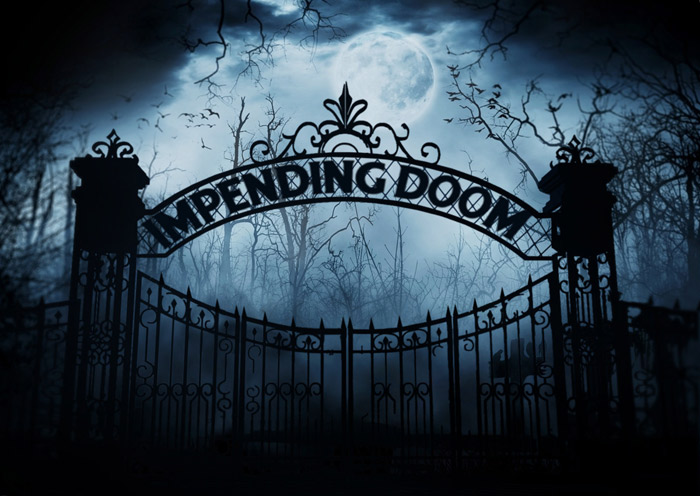
Do You Struggle with Feelings of Impending Doom? Episode 514
 Hello!
Thank you so much for being here today. I mean that sincerely. There are a lot of places you could be spending your time and attention right now, and I’m grateful you’re spending some of it here.
Let me take a moment to tell you a little about what I do, especially if you’re new to the podcast/blog.
Listen to the podcast now:
Listen to this podcast on Spotify, Apple podcasts, Soundcloud
Watch on You Tube: https://youtu.be/rfUp_WsNFxs
I’ve been a certified clinical hypnotherapist for 23 years. And in that time, I’ve worked with hundreds of people who are struggling with the kind of stuff that doesn’t always get talked about openly. Anxiety. Fear. Self-doubt. Negative thinking patterns. Bad habits. The feeling that no matter how hard you try, something keeps getting in the way of your success, happiness and health.
My job is to help people change, not just on the surface, but at the deeper level where change actually sticks. I do that using the tool of hypnosis, which works directly with the subconscious mind.
Here’s a simple way to think about it. Your conscious mind is the part that sets goals, makes plans, and knows what you want. Your subconscious mind is the part that runs the show behind the scenes: your habits, your automatic reactions, your deeply held beliefs about yourself and the world. And sometimes those two parts of the mind are working against each other. Your conscious mind says “I want to feel calm and confident” while your subconscious is running an old program that says “danger is everywhere and nothing is safe.”
Hypnotherapy helps bring those two parts into alignment. It uses the power of focused attention and suggestion to update the old programming so that your subconscious mind starts supporting your goals instead of sabotaging them.
If that sounds like something you could use, stick around to the end and I’ll tell you how to get in touch.
But for now, let’s get into today’s episode.
WHAT WE’RE TALKING ABOUT TODAY
Do you struggle with feelings of impending doom?
You know the feeling I’m talking about.
That low-level sense that something bad is about to happen. That any minute now, the other shoe is going to drop. You might be having a perfectly good day – things are going well, life feels okay – and then out of nowhere, this feeling creeps in. A kind of quiet dread. A nagging sense that this good time won’t last. That something is wrong, even when you can’t point to exactly what.
It’s an awful feeling. And if you experience it regularly, you know how exhausting it can be.
The good news is that you’re not alone. And more importantly, there are real, concrete reasons why this happens. And real, concrete things you can do about it.
That’s what today’s episode is all about.
WHERE IT COMES FROM
Let’s start by talking about where this feeling comes from. Because understanding the source of something can be the first step toward changing it.
For many people, and I see this constantly in my hypnotherapy practice, the feeling of impending doom has its roots in childhood. Specifically, in what we sometimes call family of origin issues.
If you grew up in a home where things were unpredictable, where you never quite knew what to expect from a parent, a sibling, or the general atmosphere of the household, your nervous system learned to stay on high alert. It learned that safety was not guaranteed. That at any moment, things could go sideways.
Maybe there was addiction in the home. Maybe there was emotional or verbal abuse. Maybe a parent’s moods were volatile and unpredictable. Maybe there was constant conflict, or financial instability, or just an underlying atmosphere of tension that nobody ever talked about.
As a child in that environment, you adapted. You kept your head down. You stayed vigilant. You learned to read the room and to pick up on the subtle signals that told you whether it was safe or not. You were always prepared for something bad to happen, because something bad often did.
And here’s the thing about that kind of early experience: it leaves a mark. Not because anything is wrong with you but because your nervous system did exactly what it was designed to do. It learned. It adapted. It kept you safe.
The problem is that the nervous system doesn’t automatically update itself when the circumstances change. You grow up. You leave that environment. But the alarm system that was installed in childhood, the one that’s constantly scanning for threat — it stays on. It keeps running. And it shows up in adulthood as that chronic, low-level feeling that something bad is about to happen.
That’s not a character flaw. That’s not weakness. That’s a nervous system that learned its lessons too well and never got the memo that things are different now.
THE FIGHT OR FLIGHT CONNECTION
What I’m describing is closely connected to something you’ve probably heard of — the fight or flight response.
This is our built-in survival mechanism. When our brain perceives a threat whether real or imagined, it triggers a cascade of physiological changes designed to help us fight or run. Heart rate increases. Muscles tighten. Stress hormones flood the bloodstream. The body goes into full alert mode.
This is an incredibly useful system when you’re actually in danger. The problem is that it was designed for short-term threats and not for the chronic, ongoing stress of modern life. And when it gets triggered repeatedly over a long period of time as it does for people who grew up in unpredictable or unsafe environments, it can essentially get stuck in the on position.
The alarm never turns off.
And the physiological consequences of that are significant. Stomach problems. Headaches. Back pain. Muscle tension. Sleep disruption. A body that is constantly braced for impact, even when there’s nothing to impact.
And psychologically, there’s that persistent feeling that something is wrong. That something bad is coming. That it’s only a matter of time.
THE NEWS AND SOCIAL MEDIA CONNECTION
Now I want to talk about something that I think is making all of this significantly worse for a lot of people right now.
The news. Social media. And our collective addiction to both.
We are living in a moment of extraordinary political and social anxiety. And the media ecosystem we’re all swimming in is specifically designed to keep us in a state of heightened alertness. Outrage. Fear. Urgency. The sense that the world is on the brink of something terrible.
And here’s the thing — from a neurological standpoint, it doesn’t matter whether the threat is real or perceived. Your nervous system responds the same way. Whether you’re actually in danger or just watching a cable news segment designed to make you feel like you’re in danger — your body fires the same alarm.
So if you are someone who already has a nervous system that’s primed for threat such as someone who grew up with that underlying sense of danger, and you are also spending hours every day consuming anxiety-producing news and social media content, you are essentially pouring fuel on a fire that was already burning.
I’ve talked before on this podcast about what I call the dangerous mass hypnosis of news and social media. And I mean that literally. The repetition, the emotional intensity, the constant bombardment of alarming information is hypnotic. It puts you in a trance. And in that trance, your nervous system can’t tell the difference between what’s actually happening in your life and what you’re consuming on a screen.
The result? A chronic, low-level state of fight or flight. A persistent feeling that something bad is about to happen. A nervous system that never gets a chance to rest.
If this resonates with you, and I suspect for many of you it will, one of the most powerful things you can do is to become very intentional about what you’re consuming and how much of it. I’m not saying ignore the world. I’m not saying stick your head in the sand. But I am saying that your mental and emotional health matter. And protecting them sometimes means turning off the news, putting down the phone, and giving your nervous system a chance to remember what calm actually feels like.
THE BLOOD SUGAR CONNECTION
Now let me mention something that might surprise you because it surprised a lot of my clients when I first brought it up.
Sometimes that feeling of impending doom has a very simple physiological cause.
Low blood sugar.
I know. Not exactly what you were expecting. But hear me out. (I’ve discussed this before on this podcast “Could Low Blood Sugar Be Affecting Your Mood More Than You Realize?”)
When you skip meals or when you go too long without eating, your blood sugar drops. And your body interprets that drop as an emergency. A threat. So it responds the way it always responds to threats: it triggers the stress response. It pumps cortisol and adrenaline into your bloodstream.
And one of the ways that can feel? Like a vague, unsettling sense that something is wrong. That something bad is about to happen.
I experience this myself. If I haven’t eaten in a long time, I’ll notice this low-level feeling of unease like something is off. And then I’ll realize “Oh. I need to eat.” And sure enough, once I do, the feeling lifts.
So before you go too deep into analyzing the psychological roots of your impending doom make sure you’re eating regular meals. It sounds almost too simple. But for a lot of people, especially those who are very busy and tend to skip meals, this is genuinely part of the picture.
THINGS HANGING OVER YOUR HEAD
There’s another common source of that doom feeling that’s worth mentioning.
Things you’re avoiding.
The phone call you’ve been dreading. The appointment you keep putting off. The conversation you know you need to have. The bill you haven’t opened. The situation you’ve been hoping will just somehow resolve itself.
Procrastination and avoidance are anxiety’s best friends. The longer you put something off, the larger it looms. And that unresolved thing sitting in the background of your mind creates a kind of constant low-level dread: a sense that something is wrong, even when you can’t quite put your finger on it.
The antidote, as uncomfortable as it sounds, is usually simple: just do the thing.
Make the phone call. Schedule the appointment. Have the conversation. Open the bill.
It’s almost never as bad as the anticipation. And the relief that comes from just dealing with it — from taking the thing off your plate, is immediate and real.
WHAT YOU CAN DO ABOUT IT
Okay, so let’s talk about practical tools. Because understanding where something comes from is helpful, but what you really want to know is what you can do about it.
The first thing I want to suggest is to start identifying the source. If anything I’ve described today such as the family of origin stuff, the news and social media overload, the blood sugar connection, the things you’re avoiding, if any of that resonates with you, take some time to sit with it. Write it down. Acknowledge it. Sometimes just naming the source of the feeling such as “oh, this is my nervous system doing what it learned to do as a kid” or “this is what happens when I spend two hours on social media before bed”, can take some of the power out of it.
Awareness is always the first step.
The second thing is to talk to yourself differently. If your feeling of impending doom has roots in childhood such as growing up in an environment where you didn’t feel safe, one of the most powerful things you can do is gently remind yourself that things are different now.
You are not a child anymore.
You are safe now.
I know that might sound simplistic. But remember that we’re talking about the subconscious mind here. And the subconscious mind responds to repetition. When you consistently tell yourself “I am safe. I am secure. I am okay”, especially in that relaxed, receptive state just after waking up in the morning, then you are literally beginning to update the old programming.
Pair that with this affirmation: “I wonder what good things are going to happen today.”
This is not toxic positivity. This is neuroscience. There’s a part of your brain called the reticular activating system: think of it as a filter, or a radar. It scans your environment for whatever you’ve told it to look for. If you tell it to look for threats, it will find them everywhere. But if you tell it to look for good things such as opportunities, moments of connection, reasons to feel okay — it will start finding those instead.
What you look for, you find. So look for something worth finding.
The third thing is to protect your media consumption. Be intentional about what you let into your mind and when. Consider a news fast. Limit your time on social media. Give your nervous system regular breaks from the constant stream of alarming information. Your peace of mind is worth protecting.
The fourth thing is to face what you’re avoiding. Make the list. Identify the things that are hanging over your head. And then, one at a time, deal with them. Take the action. Make the call. Have the conversation. Each thing you cross off that list is one less weight on your nervous system.
The fifth thing is to write in your journal. Get the anxiety out of your head and onto the page. Name what you’re feeling. Explore where it might be coming from. Ask yourself “Is there something specific triggering this? Is there something I need to do? Is there something I need to let go of?” Writing is one of the most underrated tools for mental and emotional clarity.
The sixth thing is EFT: Emotional Freedom Technique, also known as tapping. If you haven’t heard of this, it’s a remarkably effective tool for quickly reducing anxiety and that feeling of dread. You can Google “tapping solution” or “emotional freedom technique” and find plenty of free resources to get started. I’ve seen it work wonders quickly for people who struggle with this kind of anxiety.
And finally: hypnotherapy. As a hypnotherapist, I work with the subconscious mind to desensitize the old patterns that are keeping the alarm system stuck in the on position. If you’ve tried other things and still find yourself struggling with chronic anxiety or that persistent feeling that something bad is about to happen, hypnotherapy might be exactly what you need.
CLOSING
So let me bring it all together.
That feeling of impending doom — that low-level dread, that sense that the other shoe is about to drop — is one of the most common and most misunderstood forms of anxiety. It has real roots. Real causes. And real solutions.
It may come from a childhood where safety wasn’t guaranteed. It may be fed by a media environment that profits from keeping you in a state of fear. It may be as simple as skipping too many meals. Or it may be the weight of things you’ve been putting off and avoiding.
Whatever the source, you don’t have to just live with it. You can understand it. You can name it. You can take action. And you can begin one small step at a time, to feel safer, calmer, and more at peace in your own nervous system.
I’ll leave you with these words from Viktor Frankl, Holocaust survivor, psychiatrist, and one of the great voices of human resilience:
“Between stimulus and response there is a space. In that space is our power to choose our response. In our response lies our growth and our freedom.”
That space, between what triggers you and how you respond, is where your power lives. And the work we’ve talked about today is all about expanding that space.
Until next time, remember: your mind is powerful. Use it on purpose. And take care of yourself, because the world needs the best version of you.
OUTRO
Thanks for listening to Ted in Your Head. If today’s episode resonated with you, please subscribe, leave a review, and share it with someone who could use a little more peace of mind.
You can find me at TedMoreno.com. If you click on blog, you can read the blog version of this episode. If you click on contact, you can reach out for a complimentary 30-minute consultation. We’ll talk about what’s going on, answer your questions, and find out if hypnotherapy might be the right next step for you.
Take care of yourselves. I’ll see you next time.


Leave a Reply
Want to join the discussion?Feel free to contribute!