
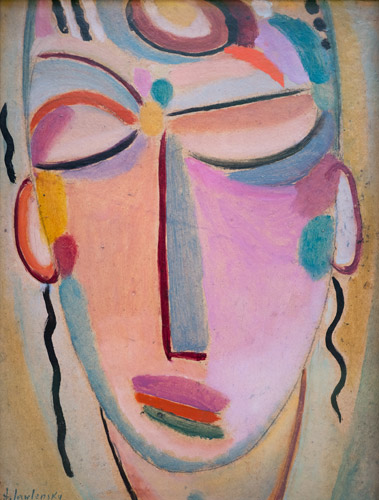
Is Meditation All It’s Cracked Up to Be? Episode 509
 Is Meditation All It’s Cracked Up to Be? Episode 509
Millions of people meditate. Neuroscientists study it. CEOs swear by it. Monks dedicate their lives to it. But does meditation really live up to the hype?”
In this episode of Ted in Your Head, Certified Hypnotherapist Ted Moreno explores the question: Is meditation all it’s cracked up to be?
Drawing from both personal experience and current scientific research, Ted discusses how meditation can reduce stress, anxiety, and depression, improve focus and emotional resilience, and even create measurable changes in the brain.
More importantly, you’ll discover how meditation can help you develop a healthier relationship with your thoughts—allowing you to step back from worry, fear, and self-criticism instead of being controlled by them.
Do you find yourself constantly thinking, worrying, or stressing about the future?
Would you like more peace of mind, greater self-awareness, and a deeper sense of presence?
Listen To This Episode Now >
Listen to this episode to learn why meditation has stood the test of time, how it can benefit your mental and emotional well-being, and some simple ways to begin a practice of your own.
Meditation has been around for thousands of years. Silicon Valley executives do it. Celebrities do it. Professional athletes do it. Monks do it. Therapists recommend it. But is meditation really all it’s cracked up to be—or is it just another wellness fad?
Let’s start by defining what meditation is.
There are many ways to define meditation. Most definitions agree that meditation (often referred to as mindfulness practice) is a way of training attention and awareness to create greater mental clarity, emotional balance, relaxation, concentration, and overall well-being.
Meditation has been practiced for thousands of years and is found in many religious and spiritual traditions. There are meditation practices that involve sitting, standing, walking, moving (such as tai chi), and even dancing.
So, is meditation all it’s cracked up to be?
A growing body of research says yes and shows that it can be remarkably beneficial.
In recent years, scientists have studied meditation extensively. Research suggests that regular meditation can reduce stress, anxiety, and symptoms of depression. It has also been shown to improve sleep quality, lower blood pressure, enhance focus and attention, and increase emotional resilience. Some studies have even found that mindfulness-based meditation can be as effective as established treatments such as cognitive behavioral therapy for certain anxiety-related conditions.
Perhaps even more impressive, brain imaging studies show that meditation can actually change the brain. Areas associated with attention, emotional regulation, and self-awareness become stronger with consistent practice.
Most importantly, meditation helps us develop a different relationship with our thoughts.
I believe that the most powerful force on the planet is the human mind. However, instead of using our minds to create, many of us are controlled by our own minds.
The most obvious result of being controlled by your mind is stress.
My two recent podcasts about the trance of modern life and the impact of low blood sugar have addressed what I feel is an epidemic in modern life: overwhelm.
In our modern culture, the amount of stress we experience can be overwhelming. Much of that stress comes from the endless conversations happening in our heads:
- How am I ever going to…
• I have to…
• I really need to…
• This sucks…
• I can’t believe this is happening…
• I hate this…
• Why does this always happen?
• I can’t deal with this…
• What if…
You already know that stress is unavoidable. In fact, some stress is necessary and even healthy. But chronic stress takes a toll on both the mind and body.
Meditation is one of the most powerful tools we have for dealing with stress.
When you hear the word meditation, you might picture someone sitting cross-legged chanting “Om.” You might assume it belongs to a particular religion or belief system.
It’s much more than that. I’ve sat in Zen meditation alongside Catholic nuns and priests and I’ve done meditation with people of no religious affiliation or belief.
At its essence, meditation means awareness.
Awareness of what your mind is doing.
Being present to what’s happening right now rather than being lost in thoughts about the past or future.
As someone who has meditated in the past and is continually working to maintain a regular practice, I think the best reason to meditate is to get to know yourself and become more comfortable with yourself.
The Tibetan word for meditation is “gom,” which means “to become familiar.”
I love that definition.
Because whatever we become familiar with, we tend to become more comfortable with.
Many of us are uncomfortable with ourselves. We struggle with stressful thoughts, difficult emotions, self-criticism, fear, and uncertainty. Sometimes it feels like we’re at war with ourselves.
Why?
Because we tend to identify with our thoughts and feelings.
We believe them. We get attached to them.
We assume that because we’re thinking something, it must be true.
Meditation helps us step back and observe our inner experience without becoming trapped in it.
We begin to realize that our thoughts are something we have—not something we are.
This is a powerful shift.
If you’ve ever said to yourself, “I don’t need to let that bother me anymore,” then you’ve already experienced a moment of detachment.
Meditation helps cultivate that ability.
As we become aware of what the mind is doing, we gain a little space between ourselves and our thoughts. That space gives us freedom.
- Freedom to choose how we respond.
- Freedom to stop scaring ourselves with imagined futures.
- Freedom to stop replaying old stories.
- Freedom to be present.
- Freedom from being overwhelmed by stressful thoughts and feelings.
At this point you might be wondering: Is meditation right for me?
It is if:
- You desire more peace of mind.
• You desire greater control over what you think.
• You desire more self-awareness.
• You desire a deeper experience of being present in your life.
I’m not a meditation expert or meditation teacher, but I’d like to share a very simple technique that can introduce you to the benefits of meditation.
Remember: meditation is called a practice for a reason.
The goal isn’t perfection. The goal is practice.
Remember, mediation is not a quick fix. Achieving sustainable benefits takes long-term, consistent practice.
A Simple Meditation Practice
- Start with just five minutes. Sit comfortably in a chair with your feet flat on the floor and your hands resting in your lap.
- Choose a time when you won’t be rushed or interrupted.
- Become aware of your body. Notice how it feels. Notice any tension, energy, or sensations.
- Take a few slow, deep breaths and gently close your eyes.
- Let your breathing return to its natural rhythm and simply observe it.
- Thoughts will arise. Your mind will wander. That’s completely normal.
- When you notice you’ve been carried away by a thought, gently return your attention to your breathing.
- Don’t judge yourself or try to stop your thoughts.
- Simply observe.
- Practice daily if possible. Even five minutes can make a difference.
One recent study found measurable changes in relaxation and focus after just a few minutes of meditation. The benefits increased as people continued practicing.
Meditation While Driving
Please don’t close your eyes!
Instead, practice being present.
- Notice the color of the car in front of you.
- Notice the sky.
- Notice the trees.
- Notice where you are.
- Most people drive while mentally somewhere else. Try driving consciously.
Focus Meditation
- Choose an object – a candle flame, a flower, a tree.
- Simply look at it.
- Observe it without labeling, judging, or analyzing.
- Just notice.
Devotional Meditation
It’s often said that prayer is talking to Spirit and meditation is listening to Spirit talking to you.
You might focus on Divine Love, a spiritual quality such as compassion, a sacred image, or simply an experience of gratitude.
Don’t worry about doing it right.
The point is to create a habit of letting go of stressful thinking and returning to the present moment.
A Book Recommendation for Beginners
If you’re interested in developing a meditation practice, I highly recommend Wherever You Go, There You Are by Jon Kabat-Zinn.
It’s simple, practical, non-religious, and one of the best introductions to mindfulness meditation ever written. The chapters are short, easy to read, and full of wisdom that you can immediately apply to daily life.
There are many books, classes, apps, and online resources available today. Find a style that works for you and start small.
To be able to sit quietly with yourself, become familiar with your own mind, and discover a deeper sense of peace may be one of the greatest gifts you can give yourself.
Is meditation all it’s cracked up to be?
In my experience—and according to the research – the answer is yes.
“Meditation is a lifelong gift. It’s something you can call on at any time. I think it’s a great thing.” ~Paul McCartney
“At the end of the day, I can end up just totally wacky, because I’ve made mountains out of molehills. With meditation, I can keep them as molehills.”
~Ringo Starr.
If you are old enough, you know that Paul and Ringo hung out in India with Maharishi Mahesh Yogi, the founder of Transcendental Meditation.
But you don’t have to travel to India to learn meditation. Just start with a few minutes a day.
You can listen to this podcast on Spotify, Apple podcasts, Soundcloud or TedinYourHead.com.
You can also watch it on my YouTube Channel Ted A Moreno, Certified Clinical Hypnotherapist.
Are you interested in developing a meditation practice but can’t find the discipline, time or mental state to make it happen? I can help. Reach out for a 30-minute complimentary phone consultation at https://tedmoreno.com/contact
I’ll get back to you in 48 hours.
Take care of you for those you love.
Ted
(Painting is Meditation by Alexej von Jawlensky, 1918)

Leave a Reply
Want to join the discussion?Feel free to contribute!